Tuesday, 21 June 2022

Parchmarks 2022 Update

In July 2013 parchmarks at Stonehenge were noticed and recorded. Parchmarks are where the grass is suffering from drought stress due to a difference in the soil compared to the rest of the area. In this context sharply defined ones can be taken as an indication of an archaeologically interesting hole that has refilled with slightly looser chalk which drains better than the undisturbed.

The main observations were of four large marks which indicated where the outer stone circle could have been completed with missing stones. There were also fainter, smaller marks which seemed to indicate a ring of holes between the Z and Y holes.

The 2013 observations were the basis of a paper https://www.researchgate.net/publication/286891547_Parchmarks_at_Stonehenge_July_2013  and a commentary https://mikepitts.wordpress.com/2014/09/01/at-last-a-stonehenge-story-that-is-exactly-what-it-says/ which is a very good summary and has this plan showing the rings of marks outside the stone circle.

The four stonehole marks of the outer sarsen circle have retrospectively been spotted in photos from many different years. (Whether all the stoneholes ever held stones is not known, but that the circle was at least designed to be a complete circle is fairly certain and this was the first proof of it. - see https://www.theguardian.com/culture/2014/sep/01/stonehenge-dry-spell-grass-perfect-circle )

For a less academic take there were headlines such as Happy Accident With Garden Hose Leads To 'Really Significant' Stonehenge Discovery

The outer marks are harder to spot and more elusive. They also are within areas that have been disturbed and even had support struts inserted in them. So I was pleased to be able to spot them again last night before the Solstice revellers took over the site. They are not just a one year phenomenon. I am convinced that there is another ring equidistant between the two known rings.

Click pictures to embiggen them.


They are very faint and for those without the eye of faith a labelled version:


And back in 2013 when they were clearer


For comparison here are the parchmarks in July 2013


Sunday, 19 June 2022

The Newall Boulder is RSN18 - ENQ2305 and OU2

 Elsewhere there seems to be confusion about the samples from "the Newall boulder" and their labels.

" In 1989 the OU team (which included Rob Ixer) examined as many bluestone fragments as they could find, including one that they referred to as RSN18 - ENQ2305. They admitted that they did not know where it had come from, and there was no mention in their text of Newall’s boulder. They renamed it OU2"

Here is a picture of the boulder with a clue for the detective to help in working out the mystery. 


Wednesday, 8 June 2022

Natural, Manuport or Artefact?

The boulder discussed below  is an excellent case where the terminology of found stones is important.

A "natural" object is one that is found where nature has placed it and in its natural state.

A manuport is a natural object, especially a stone, that has been carried and deposited somewhere by humans but has not been artificially shaped.

An artefact is usually a simple object showing human workmanship or modification as distinguished from a natural object. It can still be in its natural place, for instance a rock carving.

When discussing glacial transport unless the natural place is known very little can be inferred from an object. Once it has been humanly moved it could come from anywhere. 


The stone under discussion has marks on it and from the limited photos I have it is hard to tell what they are.

Some seem to follow the curve of the stone and appear to be natural foliations. Others appear to be more like incised lines. They might be scratches from glacial transport, or just striae of the rock structure.

If they are glacial then the rock is more likely to be a natural and brought to Salisbury Plain by ice; if they are just the surface of the rock then it is more likely it is a manuport brought from Wales by humans.

But if they are tooling marks where the stone has been dressed, and maybe it was knocked off a megalith, a little sibling to the "Boles Barrow" stone, then it is an artefact.

So skilled examination, rather than speculation from an imperfect photo, is needed to decide what this stone is. Only then can it inform us as to how it ended up under the ground at Stonehenge.
 

Saturday, 4 June 2022

An Erratic Source

In: KELLAWAY, G.A.. (Ed.), Hot Springs of Bath. Bath City Council, Bath a small rock is pictured:

This small lump of "bluestone" found at "Stonehenge" in 1924, known as RSN18, was considered by Kellaway as being an important indicator of glacial transport of erratics to the area. The lack of a recorded find spot has been problematic.

Transport of the Stonehenge Bluestones: Testing the Glacial
Hypothesis by JD SCOURSE · 1997 http://publications.thebritishacademy.ac.uk/pubs/proc/files/92p271.pdf highlights this: 


In Hawley's 6th Report Jan 1926 Vol V1 No.1 The Antiquaries Journal which is of his 1924 excavations he describes finding a foreign stone and also a photo of the excavation.

I think the stone pictured in the middle of the very left hand side of the excavations around stone 8, judging by the scale, is about the right depth and size to be the foreign stone he mentions. This provides the original context for the stone.  (Click to embiggen)


Kellaway's description seems to match it very well:


Now we need expert analysis as to whether the striae are glacial marks or simply Rhyolite layers as originally suggested.

Sunday, 22 May 2022

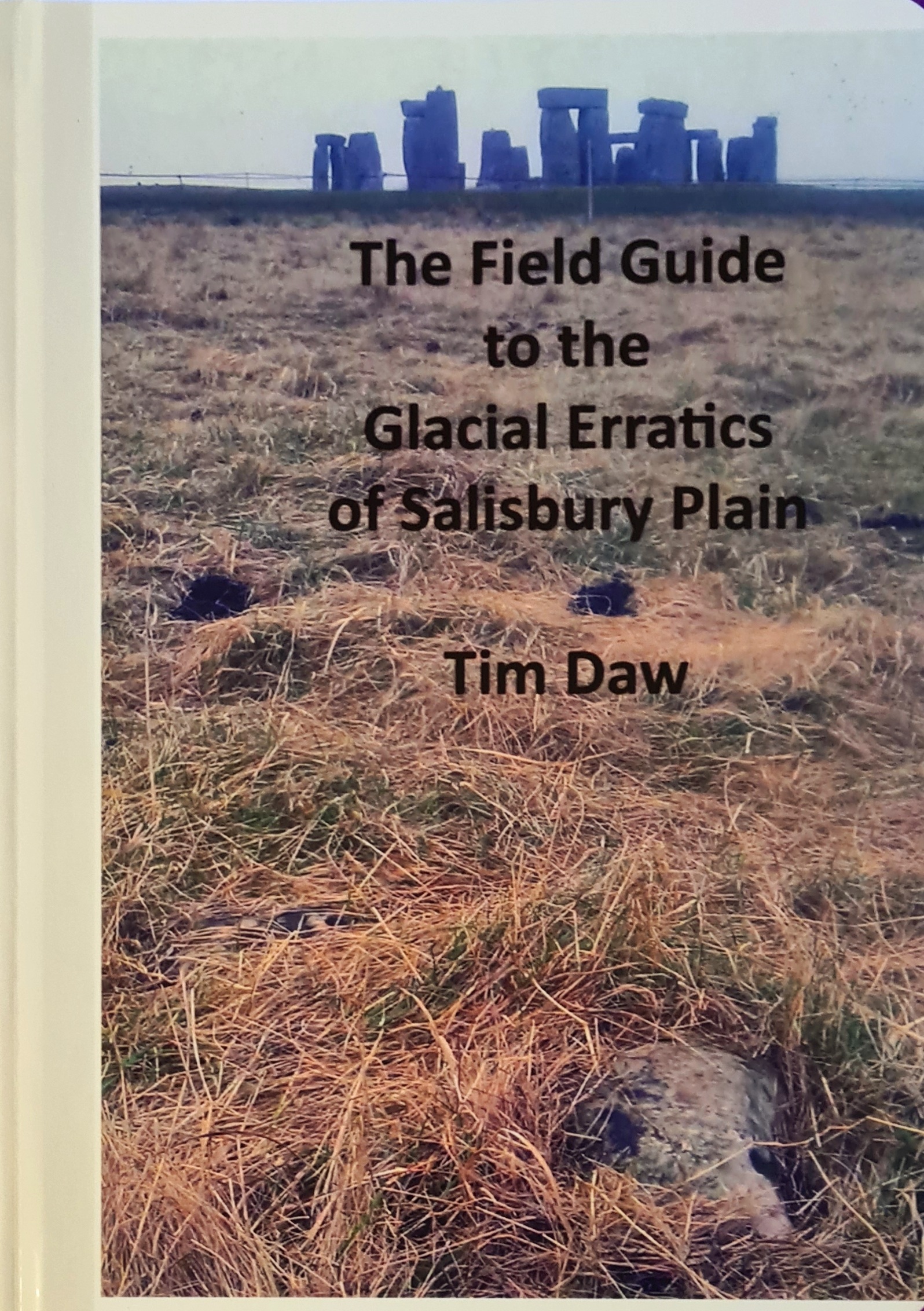
Expert Review of The Field Guide to the Glacial Erratics of Salisbury Plain.


The field guide to the glacial erratics of Salisbury Plain.

Tim Daw.

Limited edition

The presence or absence of generally accepted glacial erratics on the Plain has been a matter of speculation and controversy for a century and for many people the debate has been central to any discussion of why Stonehenge was built were it was built. This debate has included both professional and amateur geologists, archaeologist, antiquarians and quite frankly the barmy. Indeed these groups are not mutually exclusive as Stonehenge seems to bring out the bizarre and absurd in everyone it touches.

Although the text of this self-published book is succinct almost to a fault it is suitably illustrated and this above all else provided food for Daw’s scepticism. Simply, this is the definitive tome on the subject for here each picture says a thousand words. 

Also remarkably, the back cover blurb is totally accurate with no hyperbole stating “A complete guide to glacial erratic stones, such as Welsh Bluestones, known on Salisbury Plain to have been naturally deposited”.

R.A.Ixer FSA


Sunday, 24 April 2022

The Field Guide to the Glacial Erratics of Salisbury Plain - The Book.


The proof copies were sent out and well received by the expert reviewers: 
"Pithy, well researched, exhaustive."

I'm not sure I can be bothered with the hassle of looking for a larger print run, the information is out there and does anyone care enough about erratics to buy a book?

"said it was the best Stonehenge book she has ever read …..told her everything she wanted to know about Stonehenge."

Mike Parker Pearson has described it as the authoritative and definitive volume with an exhaustive and comprehensive handling of the subject. And he has read a copy.


And the first review is in from someone who hasn't seen or read the book:

".. I have a Geography degree which included studies of glaciation processes etc, and since having been a Chartered Librarian specialising in information, I place prime importance on accuracy and objectivity. As I expected, you are predictably sadly not engaging with the subject sensibly, unlike Dr Brian John. Your so - called publication is simply a parrot-like mimic of Mike Pitts' dismissive remark in his recent book. Sand, head in, and ostrich are the keywords that apply. You take a purely binary stance and insist on adopting an adversarial approach instead of showing consideration. Putin, aggression and imperialism over Ukraine are not dissimilar. Some people insist they know-it-all whilst immediately saying there is nothing-to-know.....But do you think they are serious in their pursuit of all the possible scientific evidence? Ostrich, sand, head in, "I see no ship", looking with my blind eye' all spring to mind. Also, flat-earthers."


Saturday, 2 April 2022

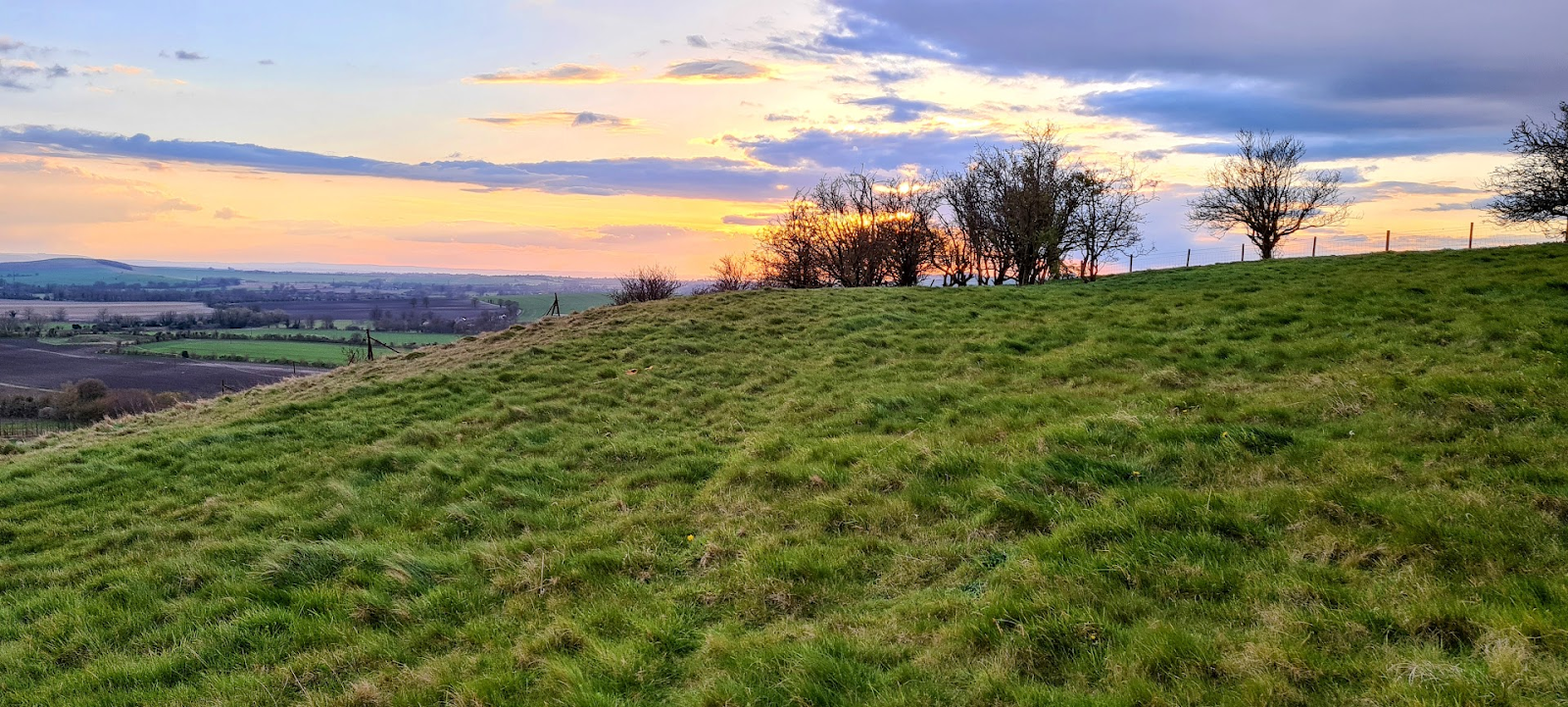
All Cannings Cross Round Barrow?

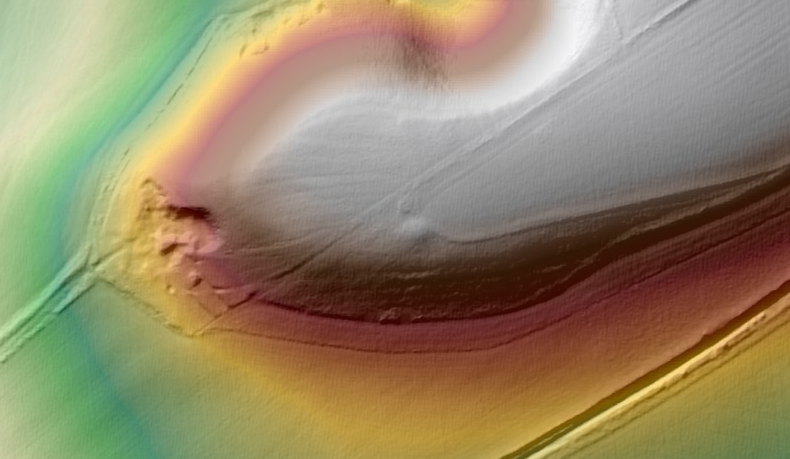
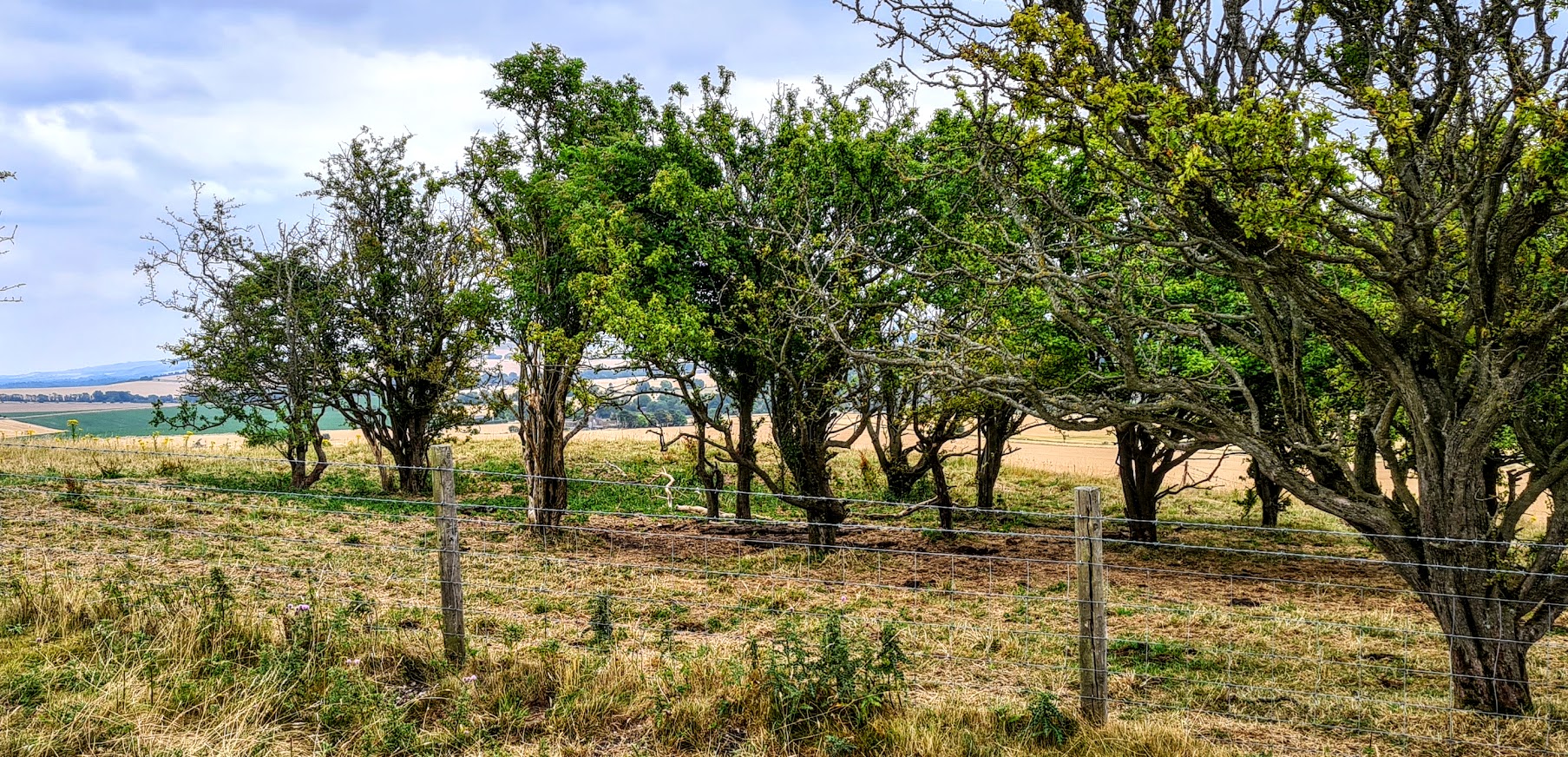
On the edge of the downland promontory above All Cannings Cross I think there is a round barrow. It wouldn't be unusual to find a barrow in such a position overlooking the vale. The Historic environment record only has an undated ring ditch in the same approximate position.  https://services.wiltshire.gov.uk/HistoryEnvRecord/Home/ViewHERItem?HER=MWI8613 

Is the ring what I think is the ditch around the barrow or is it the feature to the south of the mound on the Lidar - I couldn't find it on the ground. 

There is a chance that the mound is from the digging of a dewpond to the north west of it. There isn't a pond there now but maybe just a hint there was an unmapped one? On balance I don't think so but I like to consider other possibilities.


Click photos to embiggen


Aerial from Mike McQueen