ACADEMIA Letters
Beforeigners, Thor
Heyerdahl, and Ludwig Gumplowicz:
The concept of timesism,
temporal racism, or acrochronism
Eirik Stokke, University of Oslo
Das unheilvollste aber aller
dieser Gespenster, das den Gang der Menschheit behindert, das wie ein
Bleigewicht an deren Sohlen sich hängt, ist der Akrochronismus (möge das Wort
mir verziehen werden), das ist der unselige Wahn jedes Zeitalters, dass es das „höchste“
sei. Wir glauben fest daran, dass unsere Zeit die Zeit der „grössten
Fortschritte, der grössten Civilisation, der grössten Humanität“ sei und das
sie weit hinter uns liegen die Zeiten „der Wildheit“ und der „Barbarei“. Wir
nennen unsere Zeit das „Zeitalter der Vernunft“ und hinter uns wähnen wir die
Zeiten „des Glaubens und Aberglaubens“.
Ludwig Gumplowicz (1895), Sociale
sinnestäuschungen, Neue Deutsche
Rundschau, 6 (pp. 1–11), 1
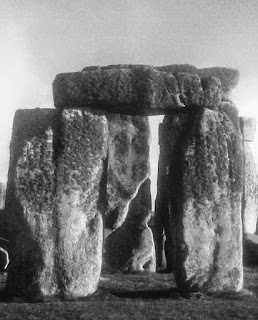
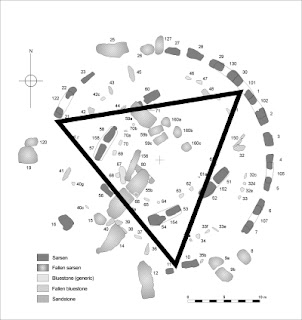
As he laid there [atop the altar
stone], drifting off in thoughts about the engineering skills of the
masterminds who built Stonehenge, and how wonderful life must have been 4,000
years ago compared to the abominable present, the starry sky was suddenly
distorted by the pale beams from gigantic searchlights. A dim, dispiriting
light came soaring overhead, followed by a buzzing hum as from an old Ford
engine. This was the wonder of current times, the pinnacle of German science.
The V-1 flying bomb made Stonehenge’s mossy “slaughter stone” an amateur in the
art of killing. Speaking as if he was Jacob the patriarch, and the altar stone
was the stone of Bethel, he tells his wife how the irremediable problem with
the world is that people are dumb and self-centred. This idiocy and in-group
mentality results not only in industrial bloodshed and ethnocentrism, but in
the superiority complex of modern civilisation over those past. Praising the
genius of the Stonehengers, he ridicules modern man’s proneness to deem his
predecessors a moronic bunch.
The author (2021), Famous explorer
Thor Heyerdahl’s sleepover at Stonehenge in 1944, Amesbury: Newsletter of the Amesbury Society, 110 (pp. 1–6), 6
The second season of the
critically praised, Norwegian TV series Beforeigners[1]
was recently launched on HBO Max. Essentially a satire of racism and xenophobia
in presentday society, Beforeigners (a
play on the words ‘before’ and ‘foreigner’) explores the ‘what ifs’ when Stone
Agers, Vikings and 19th Century people unwittingly start appearing through time
warp holes, finding themselves trapped in the future. An extract of entries
from the dictionary[2] of terms and concepts made exclusively for the series,
provides an intriguing insight into the universe that is Beforeigners:
beef breath and dinosaur Pejoratives used by
contemporaries. beforeigner or timeigrant Individual who has time
warped from the past. cont Timeigrant
pejorative. Acronym of ‘contemporary’. Jurassic
Park Derogatory term for a timeigrant reception centre.
nowsplaining To explain something to a timeigrant, typically by a
contemporary, in a condescending, belittling manner.
sneak-norseification Xenophobic, timesist term.
temporal
relativism Belief that no temporal culture or belonging is superior to any
other.
timesism
Prejudiced belief in the superiority of one’s own temporal affiliation.
Coincidentally, or perhaps not, the
ethos of Beforeigners echoes that of
Thor Heyerdahl (1914–2002), arguably the most famous Norwegian of all time.
What the series would come to label timesism, Heyerdahl referred to as
‘temporal racism’.[3] His controversial belief in socalled primitive man’s
ability to traverse world oceans was the leading motif behind the world famous Kon-Tiki, Ra and Tigris expeditions.
‘We of European extraction’, he wrote following the successful Atlantic
crossing by the multi-ethnic crew of the reed boat Ra II, ‘are surely not so blindfolded by our own history that we
consider ourselves a line of supermen, able to do four centuries ago what the
great civilizations of Asia Minor and North Africa could not have done
earlier’.[4] He would stress how conceptions like the Maya calendar and the
Sermon on the Mount were indicative of human ingenuity in early and
pre-European history,[5] and upon assessing Rapanui megalithic construction he
pointed out that ‘[t]he technique was admirable but in no way mysterious if we
cease to underestimate the intelligence of men in ancient times’.[6]
In an unfinished 1970-ish
manuscript[7] housed at the Kon-Tiki Museum, Oslo, listed as ‘Children of Adam’
(hinting at the unity of mankind) after the heading of one of its chapters, a
dichotomy is made between the sun disk and the Roman cross as visual
representatives of the highest being. Asking which one is more barbaric, he
urges the reader to contemplate the often-bigoted attitude towards the
ancients’ intellectual capacities. To judge from an old Incan legend, the
rationale continues, the Andeans of long ago venerated the ocean as consort of
the sun and mother of all life. Hence, at a time when European scholars held
the story of Genesis to be true, their unknown peers in South America, had, to
a certain extent, a pre-scientific understanding of what modern-day biologists
know as a variant of the Oparin-Haldane[8] Hypothesis, which posits that solar
energy gave rise to organic life in a prebiotic soup.
Most compelling, however, are the
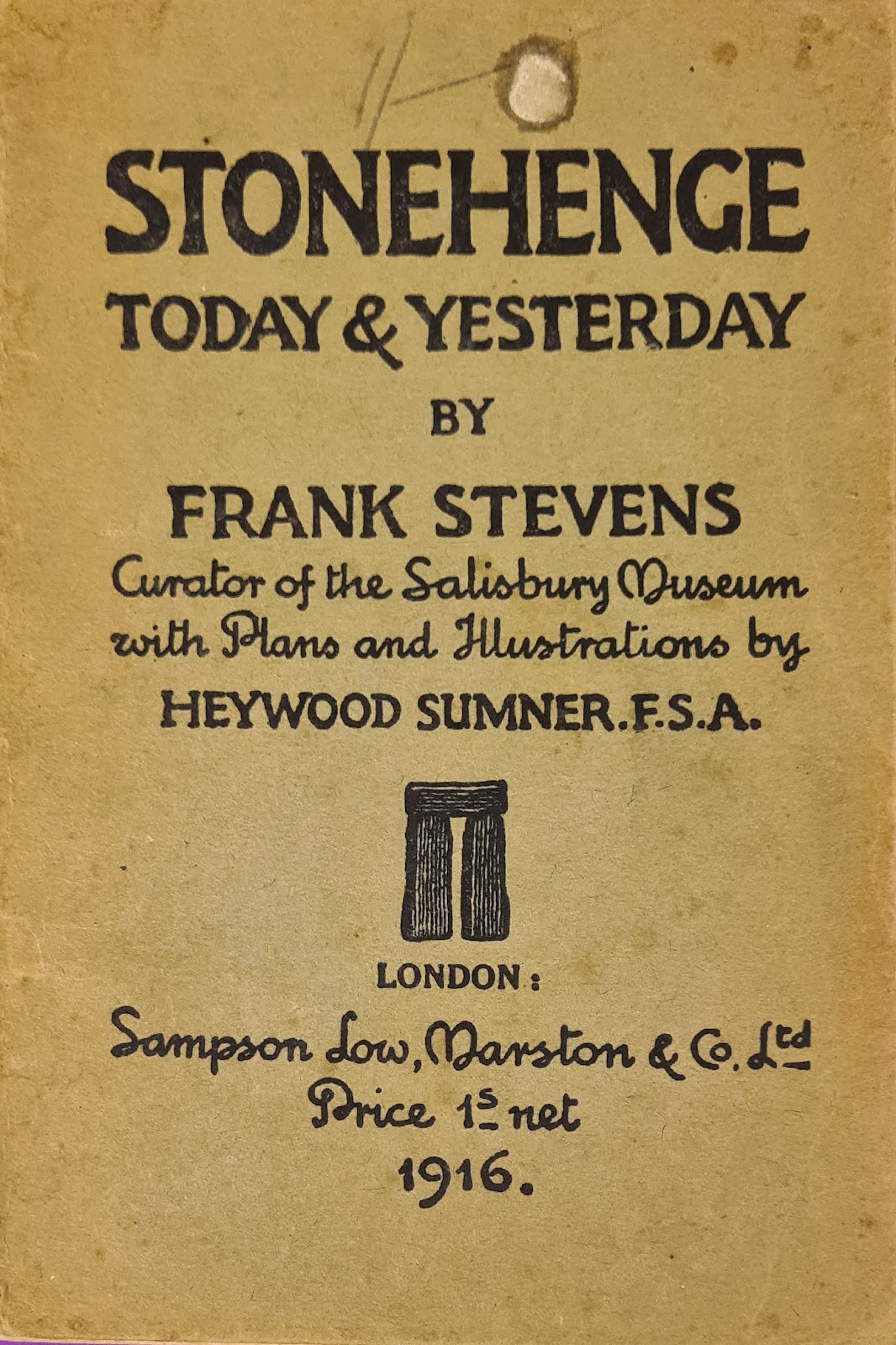
passages from what I elsewhere[9] have dubbed the ‘Stonehenge letter’. Penned
by the future celebrity to his then wife, Liv, in August 1944, telling of a visit
to Stonehenge the day before whilst on leave from a nearby army base, it lends
credence to the sincerity of his later thoughts and writings. Stirring her to
think, as he reflects on the enigma of what he deemed to be an age-old sun
temple, if a better hypostasis of the godhood than the sun can possibly be
perceived, he makes the arresting remark: ‘Place the sun and any Pius in all
his golden splendour side-by-side, and try and tell me that they were heathens any more than we are
in 1944!’[10] Yet, his temporal relativism, if you will, is never as sharp and
to the point as when he lets his quasi-religious, philosophical musings
culminate in a spirited lecture against all sorts of egotism:
We, conceited mediocres, think that
only we exist, that only our time period matters. We are like horses with
blinders. Man’s wisdom is pathetic and miserably egocentric. It has always been
thus, between individuals, between nations, between races, between eras. It
falls quite naturally to the narrow-minded human brain to hold in the highest
esteem all that includes ‘I’, ‘we’ and so on. Any other way is
incomprehensible, and nor has it been given any earthly being to comprehend the
totality of life. One is only able to understand a fraction of a fraction at a
time. And contemporary man is so busy running his own complicated messy nest,
that he neither has the time to live nor to ponder, let alone stop for a minute
and look at that which is outside the ‘we’.[11]
By statements such as these,
Heyerdahl’s temporal anti-racism is equivalent not just to the concept of
temporal relativism, but fascinatingly in compliance with what the Jewish
Polish sociologist Ludwig Gumplowicz (1838–1909) coined ‘acrochronism’ (see
epigraph).[12] Acrochronism (from Greek akros,
‘extreme’ + chronos, ‘time’) has been
described as ‘chronocentric’egotism,
analogoustotheethnocentricegotismofnationalism.[13]Andindeed, Gumplowicz
initially treated temporal bias as a form of ethnocentrism.[14] The excerpt
above shows that Heyerdahl did the same. Certain critics, however, have claimed
racism to be at the very heart of Heyerdahl’s alleged hyperdiffusionist
expedition theories, professing that they discredit indigenous peoples’
civilisational achievements in lieu of a fictitious ‘race’ of redhaired, white
culturers.[15] A recent paper lists me among scholars, who, according to the
authors, ‘have repeatedly rejected the importance of acknowledging the
scientific racism inherent in Heyerdahl’s research’.[16] Space does not allow
me to adequately address the topic, except bringing to critics’ attention the
possibility of Heyerdahl’s research being better understood if assessed in
light of his self-acclaimed acrochronistic position. Heyerdahl based his
migration theories to a large extent on native lore. To question the
authenticity of semihistorical, indigenous traditions such as, for instance,
white gods and culture heroes, ‘clearly reflects’, he writes at one point, ‘the
European underestimation of the intellect and historicalmindedness’[17] of
those people. In fact, the argument made is that the critic who dismisses such
legends, whether as imperialistic inventions or mere fables of irrational
minds, misunderstood cases of malnutrition[18] or albinism, and what have you,
runs the risk of nowsplaining.
References
[1]
Bjørnstad, A., Lien, J., Mar, F. H., Matthews, S.,
Skodvin, E., Wikander, C. (Executive Producers). (2021–2022). Beforeigners [TV series]. Rubicon TV;
HBO Max.
[2]
The entries here are gathered from the official
dictionary on HBO Nordic’s Beforeigners website
(see https://beforeigners.com/dictionary/), albeit the wordage is my own.
Celine Ryel, PR Manager Norway at HBO Europe, has kindly provided me with
additional material, whilst André Nilsson Dannevig, linguistic consultant for
the TV series, has patiently answered any questions that I had.
[3]
Wærhaug, S. (1999, November 13). – Tidsmessig rasisme. Verdens Gang (VG), p. 63.
[4]
Heyerdahl, T. (1971). Isolationist or diffusionist? In
G. Ashe, T. Heyerdahl, H. Ingstad, J. V. Luce, B. J. Meggers & B. L.
Wallace [Authors], The quest for America (pp.
115–154). Pall Mall Press, 130.
[5]
E.g., Hansson, P. (1972). Den ukjente Thor Heyerdahl,
part 1, Vi Menn, 32 (pp. 13–16, 26),
16; cf. Evensberget, S. (1994). Thor
Heyerdahl: The explorer (P. Shaw & R. Waaler, Trans.). J. M. Stenersen.
(Original work published 1994), p. 203.
[6]
Heyerdahl, T. (1950). The Kon-Tiki expedition: By raft across the South Seas (F. H. Lyon,
Trans.). George Allen & Unwin. (Original work published 1948), p. 138.
[7]
Heyerdahl, T. (No date). Children of Adam [Unpublished manuscript]. Thor Heyerdahl archives
(NO KTM 1983-100-0001-023, box 058, folder 1, chapter II). Kon-Tiki Museum,
Oslo, Norway.
[8]
Referringto theSovietbiochemistAlexanderOparinand
theBritish evolutionarybiologist J. B. S. Haldane.
[9]
Stokke, E. (2021). The Stonehenge letter:
Reconstructing a preliminary stage of the KonTikiexpeditiontheory,
WiltshireArchaeologicalandNaturalHistoryMagazine(WANHM),
114, pp. 222–231.
[10] Heyerdahl,
T. (1944, August 27). [Letter to Liv Heyerdahl]. Thor Heyerdahl archives (box
13.3, folder 2, p. vi). Kon-Tiki Museum, Oslo, Norway. All translations from
Norwegian are my own.
[11] Ibid.,
pp. viii–ix.
[12] Gumplowicz,
L. Op. cit.; cf. Bizumic, B. (2019). Ethnocentrism:
Integrated perspectives. Routledge, p. 6.
[13] Reclus,
E. (2013). The modern state. In J. Clark & C. Martin (Eds. and Trans.), Anarchy, geography, modernity: Selected
writings of Elisée Reclus (pp. 186–201). PM Press. (Original work published
1905), 188.
[14] Gumplowicz,
L. (1883). Der rassenkampf: Sociologische
untersuchungen. Wagner’sche Univ.-Buchhandlung, pp. 352–353; cf. Bizumic,
B. Op. cit., p. 14.
[15] E.g.,
Andersson, A. (2018). A hero for the
Atomic Age: Thor Heyerdahl and the KonTiki expedition. Peter Lang. (Originally published 2010); Engevold, P.
I. H. (2019). Thor Heyerdahl og jakten på
Atlantis. Humanist; Holton, G. E. L. (2004). Heyerdahl’s Kon Tiki theory
and the denial of the indigenous past, Anthropological
Forum, 14 (pp. 164–181). https://doi.org/10.1080/0066467042000238976;
Magelssen, S. (2016). Whiteskinned gods: Thor Heyerdahl, the Kon-Tiki Museum,
and the racial theory of Polynesian origins, Drama Review, 60 (pp. 25–49). https://doi.org/10.1162/DRAM_a_00522;
Melander, V. (2020). The coming of the
white bearded men: The origin and development of Thor Heyerdahl’s Kon-Tiki
theory [Unpublished doctoral thesis]. Australian National University.
[16] Rasmussen,
J. M. & Viestad, V. M. (2021). Curation by the living dead: Exploring the
legacy of Norwegian museums’ colonial collections, Critical Arts (pp. 1–21), 14. https://doi.org/10.1080/02560046.2021.1979064
[17] Heyerdahl,
T. (1978). The bearded gods before Columbus. In Early man and the ocean (pp. 96–123). George Allen & Unwin.
(Original work published 1971), 117.
[18] In
rare instances malnutrition can cause dark hair to turn reddish.
Academia
Letters, January 2022 ©2022 by the
author — Open Access — Distributed under CC BY 4.0
Corresponding Author: Eirik
Stokke, stokke.eirik@gmail.com
Citation: Stokke, E. (2022). Beforeigners, Thor Heyerdahl, and
Ludwig Gumplowicz: The concept of timesism, temporal racism, or acrochronism. Academia Letters, Article 4644. https://doi.org/10.20935/AL4644.
No changes made.