Sunday, 24 April 2022
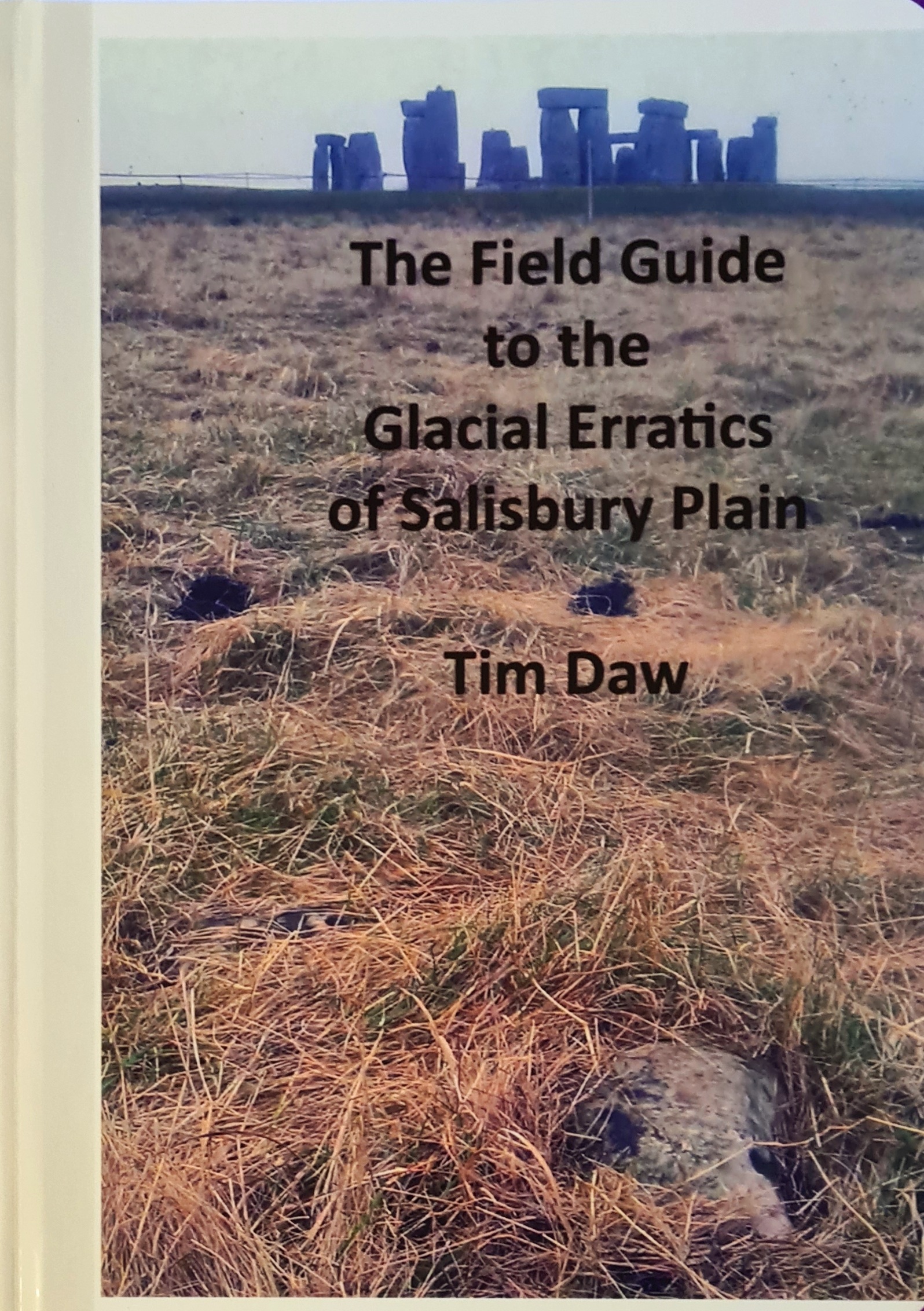
The Field Guide to the Glacial Erratics of Salisbury Plain - The Book.

Saturday, 2 April 2022
All Cannings Cross Round Barrow?
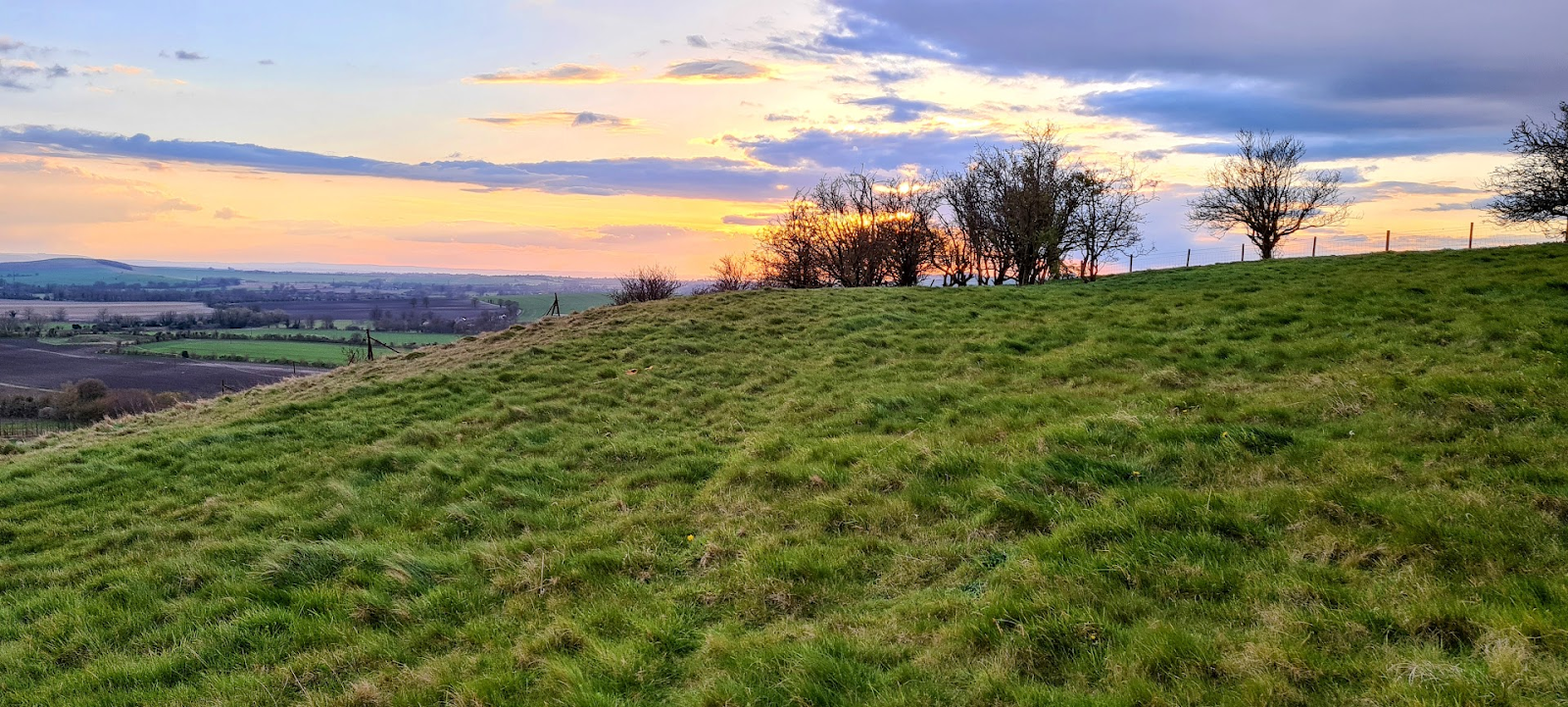
On the edge of the downland promontory above All Cannings Cross I think there is a round barrow. It wouldn't be unusual to find a barrow in such a position overlooking the vale. The Historic environment record only has an undated ring ditch in the same approximate position. https://services.wiltshire.gov.uk/HistoryEnvRecord/Home/ViewHERItem?HER=MWI8613
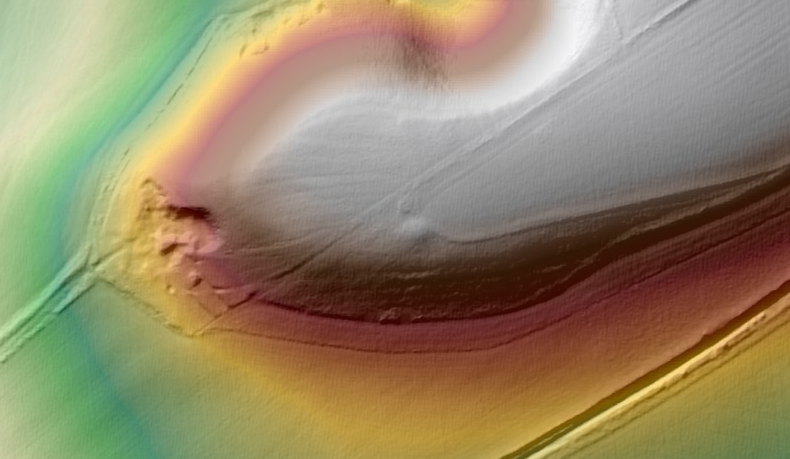
Is the ring what I think is the ditch around the barrow or is it the feature to the south of the mound on the Lidar - I couldn't find it on the ground.
There is a chance that the mound is from the digging of a dewpond to the north west of it. There isn't a pond there now but maybe just a hint there was an unmapped one? On balance I don't think so but I like to consider other possibilities.
Friday, 18 March 2022
1916 - The Glacial Drift Question
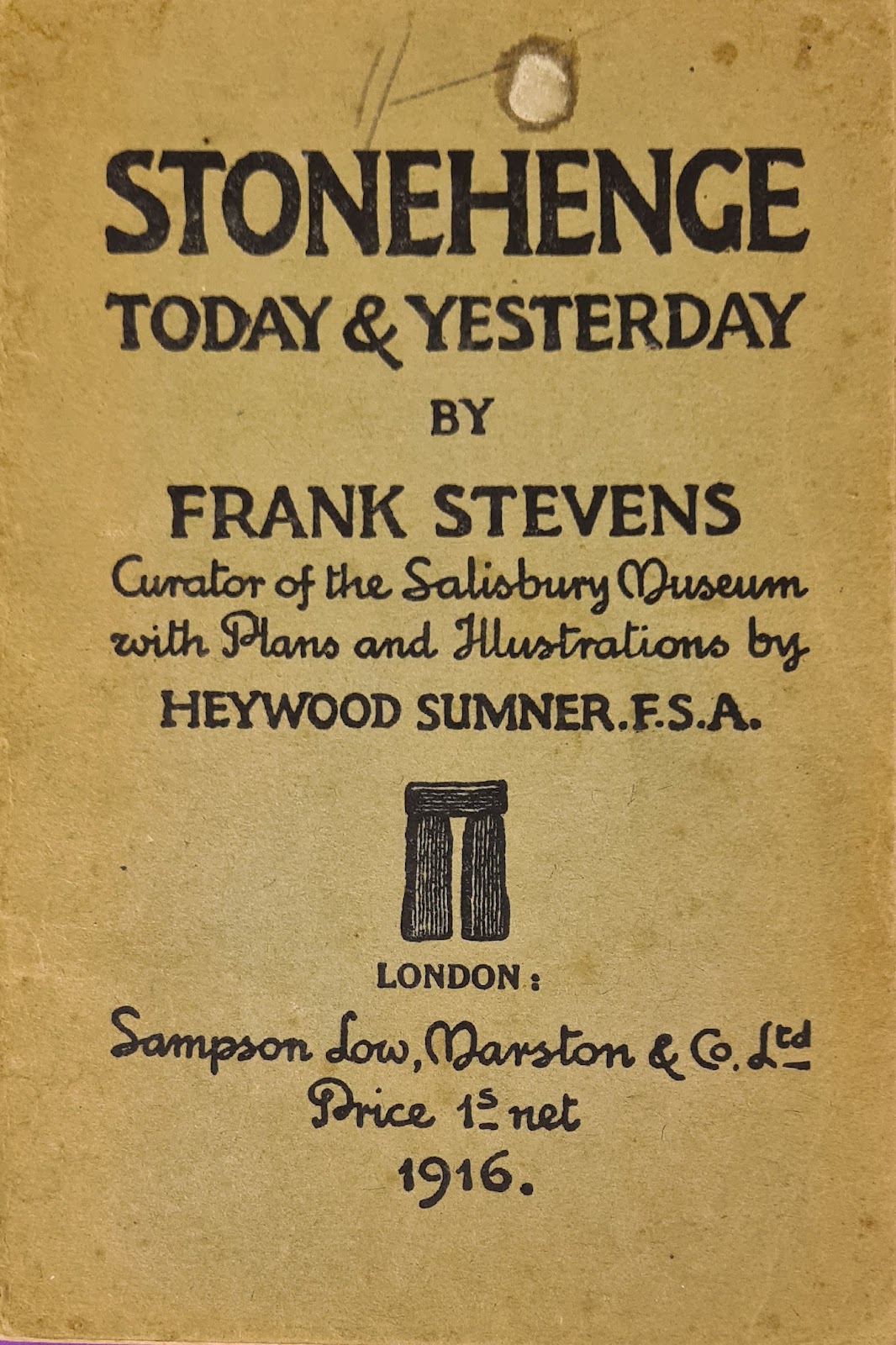
From the 1916 Stonehenge guidebook - the key question that the Glacial Drift theorists still can't answer.
THE FOREIGN STONES
While the Sarsens usually awake the greatest interest by
reason of their bulk, and the problem of how a primitive people was able to
deal with them, a far greater problem is presented by the small uprights, or
Foreign Stones, the like of which cannot be matched within a hundred miles of
Salisbury Plain, while some can only be found upon the continent of Europe.
Fragments carefully removed and submitted to mineralogists have made this fact
abundantly clear, and consequently it is possible to arrive at the very
definite conclusion that Stonehenge is certainly not a "Wiltshire "
monument, and probably that it is not even "British" at all.
Where have the stones come from? One school of writers
ventures to suggest Kildare in Ireland. Others suggest Wales, Cornwall, Dart
moor, Shropshire, or Cumberland, where similar rocks are to be found, though
perhaps not absolutely identical in character. Yet another theory advanced is
that the Foreign Stones were transported to the plain as boulders of the
"glacial drift." It has even been stated that the gravels of the
district contain small pebbles composed of rock similar to these mysterious
Foreign Stones. The statement has indeed been made, but as yet no Wiltshire
geologist has produced one of these pebbles of which so much is written, and so
little seen.
These Glacial Drift theorists, further account for the
absence of these foreign stones elsewhere than at Stonehenge, by yet another
theory, that they, like most of the Sarsens, have all been used up for
millstones, gateposts, and road metal.
There are many millstones and gateposts in Wiltshire, but
where is there one which corresponds in any way to the upright Foreign Stones at
Stonehenge? The production of pebbles from the gravels of Wilts, or of a
specimen gatepost or millstone would at once settle this question. Unhappily
this tangible evidence is wanting, so, alluring as the Glacial Drift theory may
appear, it must reluctantly be set aside for want of convincing evidence.
Finally, there seems every reason to believe that the small
upright stones are "naturalised aliens. from abroad, and that is why they
have been described at the commencement of this section as "Foreign
Stones." It must not be taken for granted that the small upright stones at
present standing represent all the foreign rocks employed. Probably they are
merely the hardest and most durable of those used in the original structure,
the softer and more friable examples having disappeared entirely, owing to the
action of the weather, and possibly also to the assaults of the unchecked
relic-monger, who until recent years could with his hammer collect souvenirs
with impunity.
STONEHENGE TODAY & YESTERDAY BY
FRANK STEVENS
Curator of the Salisbury museum with Plans and Illustrations by HEYWOOD SUMNER.F.S.A.
LONDON :
Sampson Low, Marston & Co. Ltd Price 1/3 net
1916.
Thursday, 3 March 2022
Stanenges, where stones of wonderful size have been erected after the manner of doorways.
Monday, 21 February 2022
An explanation of the word "Sarsen"
In the Addenda and Notes to " Abury Illustrated," the following is given as an explanation of the word "Sarsen": " The term Sarsen, or Saresyn, was applied by the Anglo-Saxons, simply in the sense of Pagan, to the stones which they found scattered about the Wiltshire Downs. As all the principal specimens of these mysterious blocks were perceived to be congregated into temples popu- larly attributed to heathen worship, it naturally came to pass that the entire formation acquired the distinctive appellation of Sarsen or Pagan stones. The same epithet of ' Saresyn ' the Saxons also applied to their invaders the Danes or Northmen, who, on their coming into this country, were universally pagan. Thus Robert Ricart (quoted in Roberts' History of Lyme) says, ' Duke Rollo Le Fort was a Saresyn come out of Denmark into France ; ' and a spot in Guernsey is still designated by the same term from having constituted the temporary stronghold of certain Norman freebooters." — Waylen's History of Marlborough, p. 529.
The following is from Mr. Henry Lawes Long's ' ' Survey of the Early Geography of Western Europe : " " In addition to the suggestion advanced that our word Sarsen, as applied to the Druid sandstone, is, in fact, a corruption of Saracen, I may add that Sarrasin is the name commonly given on the Continent to ancient objects whether of Celtic or Roman construction, thereby inferring a period anterior to any remains of Christian origin. Roman denarii, which in the north of France still occasionally are current as sous, bear the name of Sarrnsins. The Roman bridge near Aosta is called the Pont de Sarrasins." And I may add the following extract from the " Journal de I'Architecture," (of Brussels,) 4"". annee, p. 84 : " Les traditions locales attribuent la con- struction des chaussees romaines aux Sarrasins. Les mines, les tuiles antiques, les poteries, les medailles, etc., que Ton trouve chaque jour, ne sont connus, comme on salt, que sous les noms de Masures, de Vahes, de JiJonnaies, ou de puits des Sarrasins, Cette denomination remonte evidemment aux temps des Croisades, lorsque les esprits etaient remplis du nom des infideles. Du reste, les armees et les populations qui revenaient de Terre-Sainte, en suivant les chaussees romaines, n'auront pas peu contribue a repandre aux environs I'epithete injurieuse de Sarrasin et de payen, dans laquelle ils auront confondu les Romaines si, comme il est probable, un faible souvenir de ce grand peuple vivait encore a cette epoque dans le souvenir de nos peres." Mr. Long quotes the following from Col. Symonds's Diary, which his cousin, Mr. C. E. Long, edited for the Camden Society: " 12"' Nov. 1644, Tuesday, though a miserable wett windy day, the army moved over the playnes to Marlingsborough, where the King lay at the Lord Seymour's howse, the troopes to Fyfield, two myles distant, a so full of a grey pibble stone of great bigness as is not usually seene ; they breake them, and build their howses of them and walls, laying mosse betweene, the inhabaitants calling them Saracen's stones, and in this parish a myle and halfe in length, they lye so thick as you may goe upon them all the way. They call that place the Grey -weathers, because a far-off they looke like a flock of sheep”.
From Wiltshire Archaeological and Natural History Magazine Vol XVI 1876 pp.68-75
https://archive.org/details/wiltshirearchaeo16arch
I will add the old farmworkers I grew up pronounced them Saracen Stones. I note also that some of the young of the Pewsey Vale still pronounce Saracen as Sarsen: My daughter for instance:
Update: It has been pointed out by Brian Edwards that "In an experiment in 1986 Kennet Valley locals that spoke with the Wiltshire dialect were recorded saying King's Hill which when spoken translated to "King Zil", Saracen which translated to "saracen" so the same, but Saxon translated to "sarsen". Subsequently, when asked to say sarsen, the tapes reveal what distinctly sounds like Saxon."
Dialect in Wiltshire: And Its Historical, Topographical and Natural Science Contexts by Malcolm Jones, Patrick Dillon Wiltshire County Council, Library & Museum Service, 1987 reproduces from M Wakelin's English Dialects: an introduction 1977 a map that shows the boundaries of the South Western Dialect as defined by the voicing of initial fricatives in the 1950s, ie saying Varmer or Farmer.
It is noticeable that the Kennet valley between Avebury and Marlborough is close to the boundary and lay just outside the South-western dialect area. I believe the dialect area had shrunk since Victorian times, and continues to do so.
Click to enlarge
And from 1903: