Stonehenge: New Study Challenges Timeline For Construction Of Ancient Monument
Ancient people probably assembled the massive sandstone horseshoe at Stonehenge more than 4,600 years ago, while the smaller bluestones were imported from Wales later, a new study suggests.
The conclusion, detailed in the December issue of the journal Antiquity, challenges earlier timelines that proposed the smaller stones were raised first.
"The sequence proposed for the site is really the wrong way around," said study co-author Timothy Darvill, an archaeologist at Bournemouth University in England. "The original idea that it starts small and gets bigger is wrong. It starts big and stays big. The new scheme puts the big stones at the center at the site as the first stage."...
Though only some of the stones remain, at the center of the site once sat an oval of bluestones, or igneous rocks (those formed from magma) that turn a bluish hue when wet or freshly cut. Surrounding the bluestones are five giant sandstone megaliths called trilithons, or two vertical standing slabs capped by a horizontal stone, arranged in the shape of a horseshoe.
Around the horseshoe, ancient builders erected a circular ring of bluestones. The sandstone boulders, or sarsens, can weigh up to 40 tons (36,287 kilograms), while the much smaller bluestones weigh a mere 4 tons (3,628 kg). ...
Like past researchers, the team believes that ancient people first used the site 5,000 years ago, when they dug a circular ditch and mound, or henge, about 361 feet (110 meters) in diameter.
But the new analysis suggests around 2600 B.C. the Neolithic people built the giant sandstone horseshoe, drawing the stone from nearby quarries. Only then did builders arrange the much smaller bluestones, which were probably imported from Wales. Those bluestones were then rearranged at various positions throughout the site over the next millennium, Darvill said.
"They sort out the local stuff first, and then they bring in the stones from Wales to add to the complexity of the structure," Darvill told LiveScience
From the sheer engineering point of view I thought the consensus has always been the big five trilithons first, then the sarsen ring and then infill with Bluestones. It is hard to see how they could have erected the big stones if they had to work round the Welsh stones. So I see nothing new there. But what is new is the idea that the Bluestones were not onsite or had not been used at Stonehenge before. Not in the QR holes nor in the Aubrey holes, nowhere.
Without access to the paper I don't know what they base this idea on.
Gowland's report from 1901 describes in detail the stones found when he dug round Stone 56 and under 55. He found Bluestone chippings at depth in all the holes, suggesting that the stones were erected when there was Bluestone debitage on the surface. This would support the idea that the Bluestones arrived before the Sarsens and had been used and worked before they were removed from their holes to allow the erection of the Sarsens and the remodelling of Stonehenge and then put back in their present positions, plus or minus some further fine tuning.
Tuesday, 4 December 2012

Sunday, 2 December 2012
Stonehenge Before The Stones
Mike Pitts floats an interesting theory that the post holes, ditches and stones at the north east entrance to Stonehenge may have been a Mortuary Enclosure - details at his blog - that pre-dates the stone phases of Stonehenge.
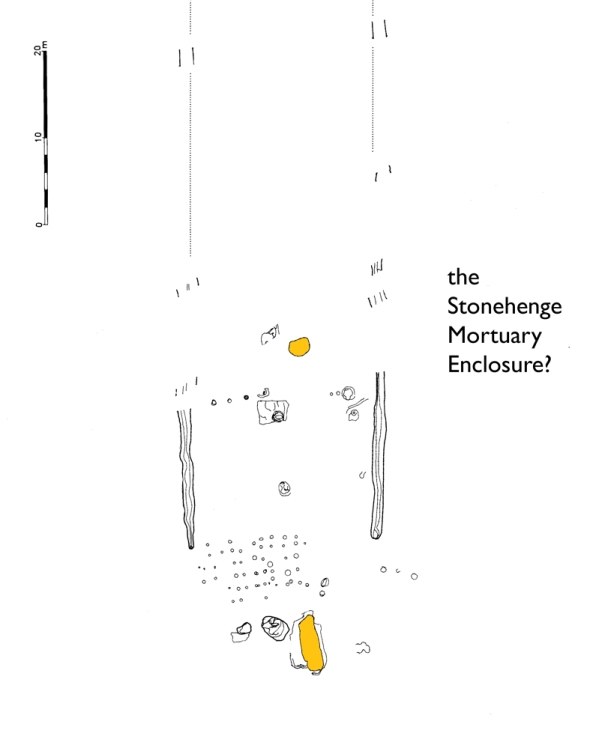
But those post holes are only some of the many we know about, and there is much of Stonehenge we don't know what post holes are or were there.

(Click for larger)
Joining the dots and making some sense of them is not easy, though an "avenue" or ceremonial entrance way can be imagined from the south entrance. And alignments can easily be constructed...
The story of Stonehenge before the stones is a fascinating one that is waiting to be written.
Saturday, 1 December 2012
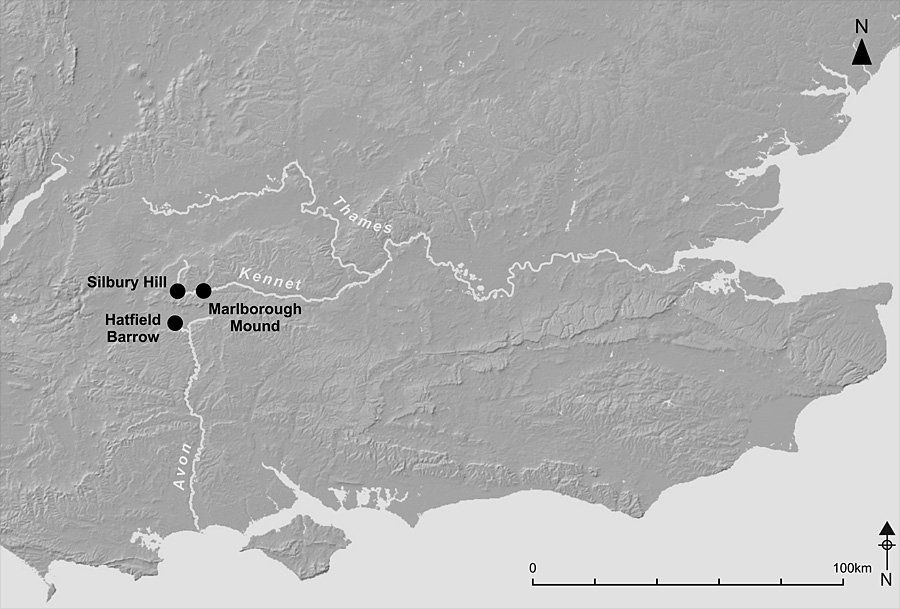
The Chronology of Silbury, Hatfield and the Marlborough Mound
Antiquity: The Giants of Wessex: the chronology of the three largest mounds in Wiltshire, UK
Jim Leary & Peter Marshall
Silbury Hill, the Marlborough Mound and the Hatfield Barrow
 Recent scientific dating programmes on the three largest mounds in Wiltshire in southern Britain allows the chronology of these prehistoric monuments to be better understood....
This work has shown for the first time that all three of these monumental mounds date to the second half of the third millennium cal BC, and all three mounds could be contemporary.
Recent scientific dating programmes on the three largest mounds in Wiltshire in southern Britain allows the chronology of these prehistoric monuments to be better understood....
This work has shown for the first time that all three of these monumental mounds date to the second half of the third millennium cal BC, and all three mounds could be contemporary.
Silbury Hill, the Marlborough Mound and the Hatfield Barrow
The Chronology of Stonehenge
Stonehenge in five easy stages (or perhaps six) « Mike Pitts – Digging Deeper: has lots about the new chronology of Stonehenge, including this handy cut out and keep guide.
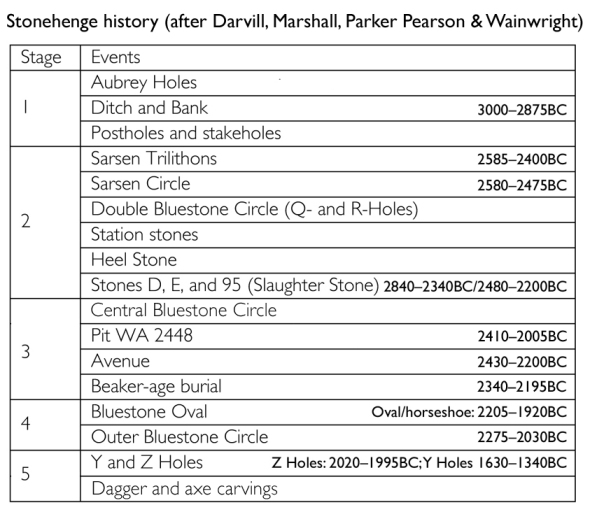
There is a lot of interesting ideas as the established time-line of Stonehenge is refined by new ideas and research and it is well worth a visit.
I will look into the source material as well and blog at greater length when time allows.
UPDATE - http://www.sarsen.org/2012/12/antiquity-articles-on-chronology-of.html has more.
Wednesday, 28 November 2012
WINTER SOLSTICE AT STONEHENGE - 2012
WINTER SOLSTICE AT STONEHENGE
- Friday 21 December 2012 -

English Heritage will once again allow people access to Stonehenge for the celebration of the Winter Solstice, the first day of the winter season. Sunrise is at 8.09am on Friday 21 December and visitors will be able to access the monument as soon as it is light enough to do so safely. Entrance is free and will be available from roughly 7.30am until 9am, when the site will close - before re-opening as per usual to paying visitors at 9.30am.
The exact time of the Solstice this year, when the Earth’s axial tilt is farthest away from the sun, is at 11.11am on 21 December, however it is generally accepted that the celebration of this special event takes place at dawn and therefore access is permitted at Stonehenge earlier that morning.
Over the last few years, the popularity of Winter Solstice has grown considerably, with many families and young people joining the druid and pagan community in the celebrations. Two years ago, 2,000 people attended Winter Solstice and in 2011 that figure more than doubled to a record 5,000 people.
Peter Carson, Head of Stonehenge, said: “We are delighted to offer people a warm welcome to Stonehenge this Winter Solstice but as facilities are limited, we are not able to accommodate any more people than last year. We don't have the luxury of using nearby fields in winter for parking and encourage people to make use of the special bus service running from Salisbury. We are working very closely with the local authorities and agencies plus the druid and pagan community to ensure that access to Stonehenge will once again be a success.”
Additional notes
Access may not be possible if the ground conditions are considered poor or if it is felt that access might result in severe damage to the monument.
Public have in previous years used byway 12 for parking on the morning of 21st December. Additional car parking for approximately 800 cars will be available on the A344 (which will be closed to through traffic).
A special Wiltshire and Dorset bus service will run from Salisbury Bus Station from 6.30am on 21 December and will drop people directly to the Stonehenge Visitor Car Park.
Connected:
New theory of a Winter Solstice Sunrise Alignment -Stonehenge and the Winter Solstice leaflet (ISBN 9780957093010)
(Background on the Winter Solstice Sunrise Alignment theory is here)
- Friday 21 December 2012 -

English Heritage will once again allow people access to Stonehenge for the celebration of the Winter Solstice, the first day of the winter season. Sunrise is at 8.09am on Friday 21 December and visitors will be able to access the monument as soon as it is light enough to do so safely. Entrance is free and will be available from roughly 7.30am until 9am, when the site will close - before re-opening as per usual to paying visitors at 9.30am.
The exact time of the Solstice this year, when the Earth’s axial tilt is farthest away from the sun, is at 11.11am on 21 December, however it is generally accepted that the celebration of this special event takes place at dawn and therefore access is permitted at Stonehenge earlier that morning.
Over the last few years, the popularity of Winter Solstice has grown considerably, with many families and young people joining the druid and pagan community in the celebrations. Two years ago, 2,000 people attended Winter Solstice and in 2011 that figure more than doubled to a record 5,000 people.
Peter Carson, Head of Stonehenge, said: “We are delighted to offer people a warm welcome to Stonehenge this Winter Solstice but as facilities are limited, we are not able to accommodate any more people than last year. We don't have the luxury of using nearby fields in winter for parking and encourage people to make use of the special bus service running from Salisbury. We are working very closely with the local authorities and agencies plus the druid and pagan community to ensure that access to Stonehenge will once again be a success.”
Additional notes
Access may not be possible if the ground conditions are considered poor or if it is felt that access might result in severe damage to the monument.
Public have in previous years used byway 12 for parking on the morning of 21st December. Additional car parking for approximately 800 cars will be available on the A344 (which will be closed to through traffic).
A special Wiltshire and Dorset bus service will run from Salisbury Bus Station from 6.30am on 21 December and will drop people directly to the Stonehenge Visitor Car Park.
Connected:
New theory of a Winter Solstice Sunrise Alignment -Stonehenge and the Winter Solstice leaflet (ISBN 9780957093010)
(Background on the Winter Solstice Sunrise Alignment theory is here)
Tuesday, 27 November 2012
93 - The Total Number of Visible Stones at Stonehenge
There are 93 rocks or lumps of stone visible at Stonehenge now - not counting the buried and missing ones. All the stones are numbered on standard plans, see below.
Note, if a numbered stone is broken and two separate bits or fragments of it are visible then it counts as two stones etc.
I have checked this on the ground, but errors may remain, please comment if you spot any.
Stone 40g is not counted because all that is visible is a lead cap.
How many stones did Stonehenge originally have is a different question.
There are five Sarsen Trilithons which gives fifteen large Sarsen stones.
The outer ring of Sarsens is planned to contain thirty uprights and thirty lintels so that is 75 worked sarsens in total.
There are four sarsens outside the centre, the two Station Stones, the Slaughter Stone and the Heel Stone.
There are stoneholes for other stones matching these, another two station stones, a matching Slaughter Stone and a paired hole to the Heel Stone. (There are other holes such as the F,G and H holes which maybe were stoneholes.) These empty holes may have held other stones or maybe stones that were then moved, for instance the Heel Stone may have originally occupied Stonehole 97. So that is between five and ten other sarsens.
There is the Altar Stone, origin unknown.
And lots of bluestones and bluestone holes. There are 29 bluestones that are still visible, but the original number is probably around 80. They have been shuffled around the holes so it is hard to be sure but that is a reasonable estimate.
So Stonehenge may have had up to 165 stones originally. It also had a vast number of stone fragments and hammerstones used for packing.
Where are the missing stones from Stonehenge?
We don't know.
There is broken up bluestone, known as debitage, all over the site. Is this from stones being broken up for tools and talismen or is it the remains of shaping the stones?
We know bits have been knocked off the edges of stones, greatly reducing them in some cases but complete stones carted off for use elsewhere have not been found despite searches. So it is another Stonehenge mystery.
(Note this is an updated post combining previous published posts into one.)
April 2020 - Note from http://www.stonesofstonehenge.org.uk/p/missing-stones.html
Some bluestones and bluestone fragments that are labelled on the plan, for example Stones 32c (Type: Altered Volcanic Ash), 32d (Type: Spotted Dolerite), 32e (Type: Rhyolite), 33e (Type: Altered Volcanic Ash), 33f (Type: Altered Volcanic Ash), 40c (Type: Calcareous Ash), 41d (Type: Altered Volcanic Ash), 42c (Type: Sandstone with Mica), 70a (Type: Spotted Dolerite), 70b (Type: Unknown) and 71 (Type: Unknown),.... are not visible above ground level and exist only as completely buried stumps.
Note, if a numbered stone is broken and two separate bits or fragments of it are visible then it counts as two stones etc.
I have checked this on the ground, but errors may remain, please comment if you spot any.
| Stone No. | Volume (m³) | Estimated above ground weight (tonnes) | Additional visible fragments |
| 1 | 5.45 | 13.08 | |
| 2 | 8.03 | 19.27 | |
| 3 | 5.55 | 13.32 | |
| 4 | 6.66 | 15.98 | |
| 5 | 5.64 | 13.53 | |
| 6 | 5.54 | 13.29 | |
| 7 | 5.97 | 14.32 | |
| 8* | 0.65 | 1.56 | |
| 9a/b | 0.25 | 0.29 | 1 |
| 10 | 7.07 | 16.96 | |
| 11† | 2.03 | 4.87 | |
| 12‡ | 6.32 | 15.16 | |
| 14‡ | 2.91 | 6.98 | |
| 15* | 1.31 | 3.14 | |
| 16 | 9.8 | 23.52 | |
| 19* | 1.65 | 3.96 | |
| 21 | 4.61 | 11.06 | |
| 22 | 5.47 | 13.128 | |
| 23 | 4.92 | 11.8 | |
| 25* | 2.95 | 7.08 | |
| 26* | 0.4 | 0.96 | |
| 27 | 5.21 | 12.48 | |
| 28 | 9.08 | 21.792 | |
| 29 | 6.95 | 16.68 | |
| 30 | 7.75 | 18.6 | |
| 51 | 9.86 | 23.66 | |
| 52 | 11.54 | 27.69 | |
| 53 | 7.56 | 18.14 | |
| 54 | 12.22 | 29.32 | |
| 55a/b | 6.6 | 15.84 | 1 |
| 56 | 9.61 | 23.06 | |
| 57 | 11.64 | 27.93 | |
| 58 | 10.02 | 24.04 | |
| 59a/b/c* | 9.1 | 21.84 | 2 |
| 60 | 9.01 | 21.62 | |
| 91 | 1.16 | 2.78 | |
| 93 | 0.56 | 1.34 | |
| 95‡ | 1.75 | 4.2 | |
| 96 | 12.47 | 29.92 | |
| 101 | 1.88 | 4.51 | |
| 102 | 2.7 | 6.48 | |
| 105 | 1.59 | 3.81 | |
| 107 | 2.1 | 5.04 | |
| 120* | 0.49 | 1.17 | |
| 122 | 2.7 | 6.48 | |
| 127* | 0.6 | 1.44 | |
| 130 | 2.6 | 6.24 | |
| 152 | 4.89 | 11.73 | |
| 154 | 7.29 | 17.49 | |
| 156 | 3.7 | 8.88 | |
| 158 | 6.9 | 16.56 | |
| 160* | 2.09 | 5.01 | 2 |
| 31 | 0.68 | 2.04 | |
| 32‡ | 0.38 | 1.14 | |
| 33 | 0.17 | 0.51 | |
| 34 | 0.11 | 0.33 | |
| 35a‡ | 0.0007 | 0.002 | |
| 35b‡ | 0.003 | 0.01 | |
| 36‡ | 0.09 | 0.27 | |
| 37 | 0.27 | 0.81 | |
| 38 | |||
| 39‡ | 0.16 | 0.48 | |
| 40 | |||
| 41‡ | 0.24 | 0.72 | |
| 42‡ | 0.1 | 0.3 | |
| 43 | |||
| 44 | |||
| 45‡ | 0.14 | 0.42 | |
| 46† | 0.14 | 0.34 | |
| 47 | 0.42 | 1.26 | |
| 48‡† | 0.066 | 0.16 | |
| 49 | 0.37 | 1.11 | |
| 61 | 0.32 | 0.96 | 1 |
| 62 | 0.41 | 1.23 | |
| 63 | 0.4 | 1.2 | |
| 64 | |||
| 65 66 | |||
| 67‡ | 0.53 | 1.59 | |
| 68 | 0.71 | 2.13 | |
| 69 | 0.72 | 2.16 | |
| 70 | 0.41 | 1.23 | |
| 72* | 0.51 | 1.53 | |
| 80 Altar Stone | 1 | ||
| 150 | |||
| Totals: | |||
| 85 | 680.962 | 8 | |
| Total Visible Stones 93 |
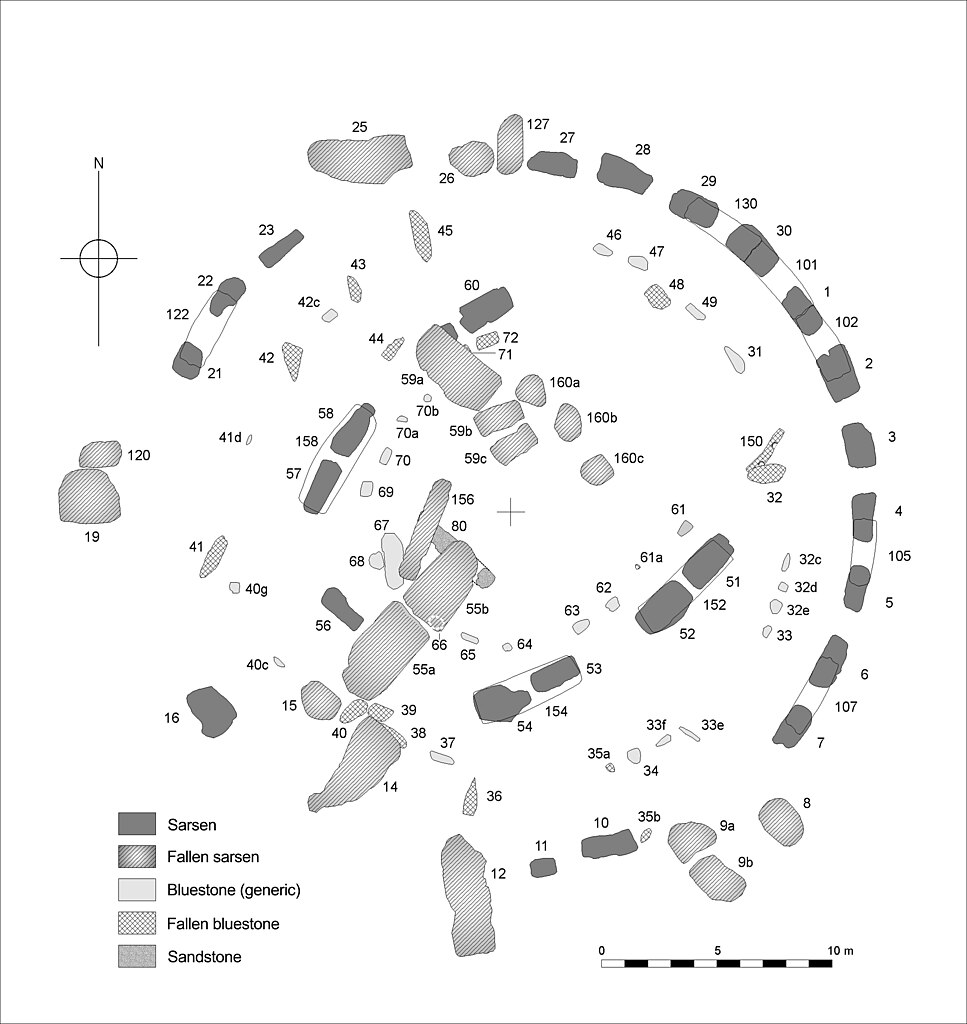 |
Click to enlarge - from http://upload.wikimedia.org/wikipedia/commons/thumb/7/7f/Stone_Plan.jpg/967px-Stone_Plan.jpg
Stone 40g is not counted because all that is visible is a lead cap.
There are five Sarsen Trilithons which gives fifteen large Sarsen stones.
The outer ring of Sarsens is planned to contain thirty uprights and thirty lintels so that is 75 worked sarsens in total.
There are four sarsens outside the centre, the two Station Stones, the Slaughter Stone and the Heel Stone.
There are stoneholes for other stones matching these, another two station stones, a matching Slaughter Stone and a paired hole to the Heel Stone. (There are other holes such as the F,G and H holes which maybe were stoneholes.) These empty holes may have held other stones or maybe stones that were then moved, for instance the Heel Stone may have originally occupied Stonehole 97. So that is between five and ten other sarsens.
There is the Altar Stone, origin unknown.
And lots of bluestones and bluestone holes. There are 29 bluestones that are still visible, but the original number is probably around 80. They have been shuffled around the holes so it is hard to be sure but that is a reasonable estimate.
So Stonehenge may have had up to 165 stones originally. It also had a vast number of stone fragments and hammerstones used for packing.
Where are the missing stones from Stonehenge?
We don't know.
There is broken up bluestone, known as debitage, all over the site. Is this from stones being broken up for tools and talismen or is it the remains of shaping the stones?
We know bits have been knocked off the edges of stones, greatly reducing them in some cases but complete stones carted off for use elsewhere have not been found despite searches. So it is another Stonehenge mystery.
(Note this is an updated post combining previous published posts into one.)
April 2020 - Note from http://www.stonesofstonehenge.org.uk/p/missing-stones.html
Some bluestones and bluestone fragments that are labelled on the plan, for example Stones 32c (Type: Altered Volcanic Ash), 32d (Type: Spotted Dolerite), 32e (Type: Rhyolite), 33e (Type: Altered Volcanic Ash), 33f (Type: Altered Volcanic Ash), 40c (Type: Calcareous Ash), 41d (Type: Altered Volcanic Ash), 42c (Type: Sandstone with Mica), 70a (Type: Spotted Dolerite), 70b (Type: Unknown) and 71 (Type: Unknown),.... are not visible above ground level and exist only as completely buried stumps.
Saturday, 24 November 2012
Stonehenge Periglacial Stripes
A great photo of the Avenue Periglacial Stripes at Stonehenge that I hadn't seen before. Showing off the skill of Aerial Cam!

Stonehenge: Excavation of the Avenue during the Stonehenge Riverside Project 2008. (Click for larger)
Aerial Cam - Specialist archaeological photography, Gallery:
Subscribe to:
Posts (Atom)