And even a wedge and apparent hammer stone just waiting to be posed in a convenient crack (no damage to any stone was done, and the tools returned to where they were found)
Saturday, 3 June 2023
Preseli Stone Wedges
And even a wedge and apparent hammer stone just waiting to be posed in a convenient crack (no damage to any stone was done, and the tools returned to where they were found)
Wednesday, 24 May 2023
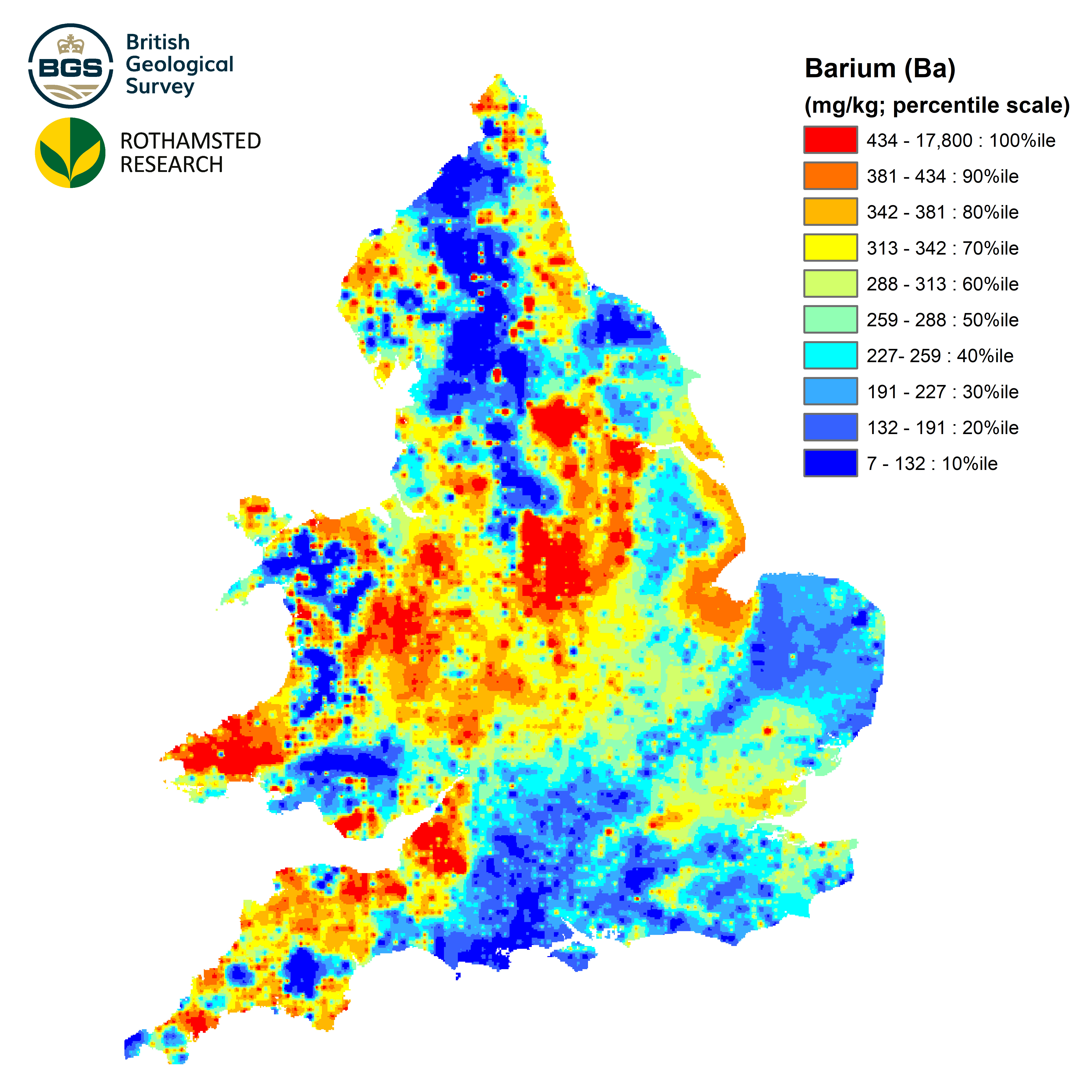
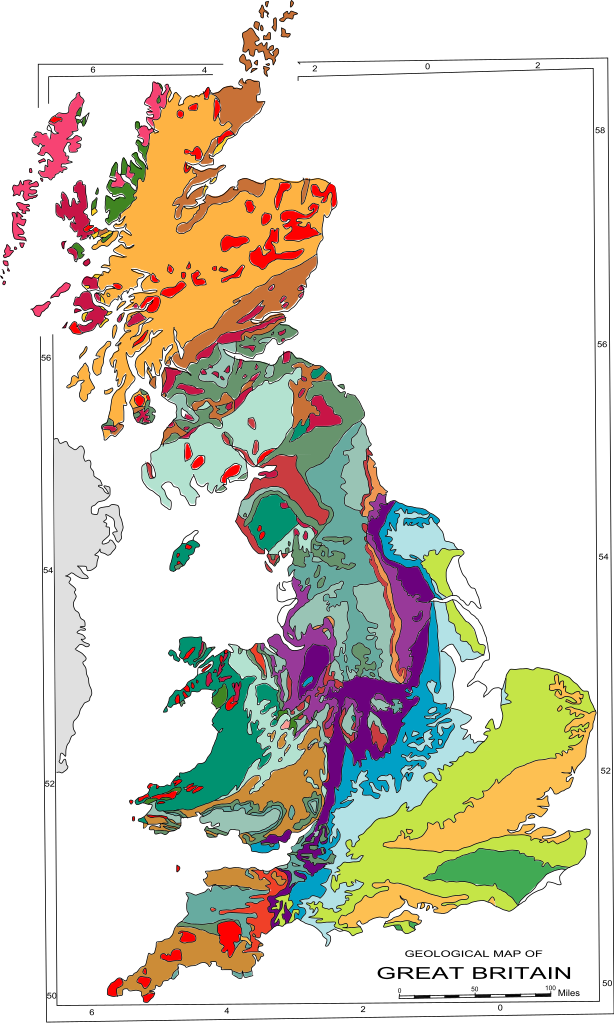
Barium levels, Old Red Sandstone and the Altar Stone
Map from https://www.ukso.org/static-maps/advanced-soil-geochemical-atlas-of-england-and-wales.html delivered under the terms of the Open Government Licence, subject to the following acknowledgement accompanying the reproduced BGS materials: "Contains British Geological Survey materials © UKRI2023".
white = Quaternary (alluvium);
beige = Palaeogene rocks;
lime green = Cretaceous;
blue/green = Lower Cretaceous;
light blue = middle/upper Jurassic;
mid blue = lower Jurassic;
dark purple = upper Triassic;
light purple = lower Triassic;
light orange = upper Permian;
brick orange = lower Permian;
light blue = upper Carboniferous (Coal Measures);
mid blue = middle Carboniferous;
muddy blue = lower Carboniferous (limestone);
dull orange & brown = Devonian;
light blue = Silurian;
slate blue = Ordovician;
dark slate blue = Cambrian;
mid orange = Neoproterozoic (Dalradian);
dark green = Neoproterozoic (Torridonian);
pink = Lewisian;
bright red =granitee;
dull red = Palaeogene volcanics
Saturday, 20 May 2023
Faking and Mistaking Stonehenge pictures
Monday, 15 May 2023
Ding Dong over Stonehenge timekeeping theory
Sunday, 14 May 2023
Mike Parker Pearson's Stonehenge: A Brief History
Mike Parker Pearson's new book, Stonehenge: A Brief History, is a concise and accessible overview of one of the world's most iconic archaeological sites. Parker Pearson, a leading expert on Stonehenge, draws on his decades of research to provide a comprehensive and up-to-date account of the monument's history, from its origins in the Neolithic period to its current status as a UNESCO World Heritage Site.
The book begins with a brief overview of the site's geology and landscape, followed by a discussion of the earliest evidence for human activity at Stonehenge. Parker Pearson then presents a detailed account of the monument's construction, which took place over a period of several centuries. He discusses the different types of stones used in the construction, as well as the methods that were employed to transport and erect them.
In addition to providing a detailed account of the monument's physical history, Parker Pearson also explores its cultural significance. He discusses the various theories that have been put forward about the purpose of Stonehenge, and he presents his own interpretation of the site as a place of ritual and ceremony. He also discusses the role of Stonehenge in the wider context of Neolithic Britain, and he considers the impact that the monument has had on people throughout history.
One of the most interesting aspects of the book is Parker Pearson's discussion of the relationship between Stonehenge and the nearby settlement of Durrington Walls. Parker Pearson argues that the two sites were once part of a single ceremonial complex, and that they were used by the same people. This new understanding of Stonehenge has important implications for our understanding of the site's purpose and significance.
Stonehenge: A Brief History is an essential read for anyone interested in learning more about this remarkable monument. Parker Pearson's clear and engaging writing style makes the complex subject matter accessible to a wide audience, and his insights into the monument's history and significance are sure to fascinate readers of all levels of interest.
In addition to its comprehensive and informative text, the book is also beautifully illustrated with photographs, drawings, and maps. These illustrations provide a valuable visual aid to Parker Pearson's text, and they help to bring the monument to life for the reader.
Overall, Stonehenge: A Brief History is an excellent resource for anyone interested in learning more about this iconic archaeological site. It is a well-written, informative, and engaging book that is sure to appeal to a wide audience.
(A review by the Google AI bot...)
Thursday, 11 May 2023
John Day and the 1802 planned restoration of Stonehenge
On January 3, 1797, an entire trilithon, stones 57,58,158, collapsed at Stonehenge. The trilithon was re-erected in 1958.
"The desire to do something about the state of Stonehenge seems first to have been discussed in the wake of the collapse of a trilithon in January 1797 .During 1800, the Rev. William Coxe, Rector of Stourton, managed to raise some £50 by subscription to go towards the cost of putting the collapsed stones back up again. The owner of Stonehenge at the time, the 4th Duke of Queensbury, refused permission. Chippindale (2005, 115) described the Duke as ‘notoriously mean and unpredictable’, and mentioned his serious neglect of Amesbury House as evidence. However, a near-contemporary account of a subsequent request to re-erect the stones suggests that Queensbury’s refusal may have been rooted more in aesthetics than meanness.The antiquarian Thomas Stackhouse’s reference to the Duke came in his account of a further effort to raise the collapsed stones. The date of this attempt is unclear, but must have occurred prior to 1810, the year the Duke died. Stackhouse described the events in his Two Lectures on the Remains of Ancient Pagan Britain..., published in 1833:
Sunday, 30 April 2023
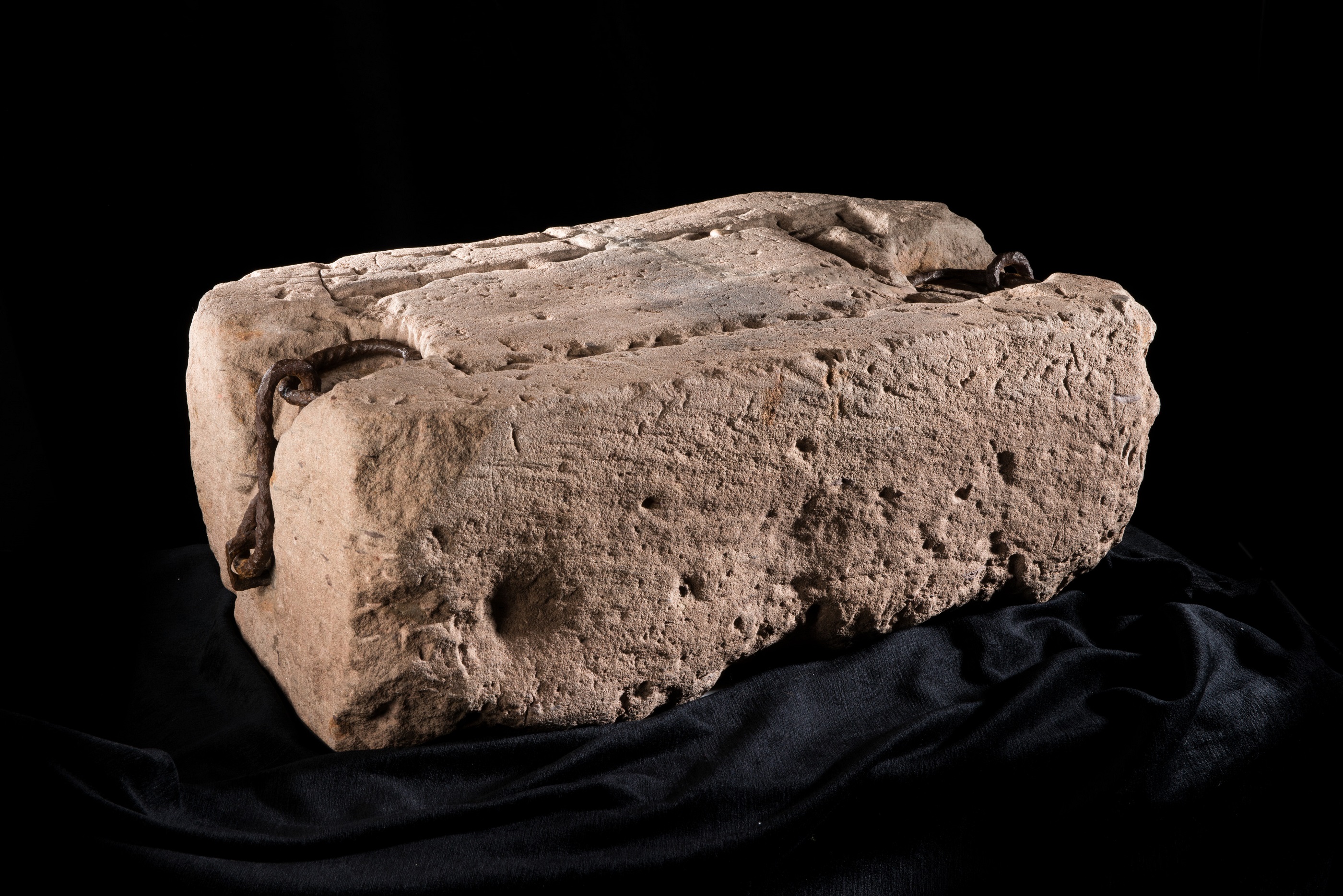
Two Iconic Sandstone Blocks
Photo https://www.historicenvironment.scot/about-us/news/20-facts-revealed-about-the-stone-of-destiny/
"The lithology of the Stone of Destiny (or Scone) resembles that of Lower Devonian sandstones from the Perth area. In particular, the texture, mineral assemblage and colour are similar to those of sandstones from the Scone Formation in the vicinity of Quarry Mill, near Scone Palace itself. It is thus possible that this area contains the bed from which the Stone was hewn, although comparable rocks may exist within other exposures of the Old Red Sandstone lithofacies in Scotland."
A geological perspective on the Stone of Destiny N. J. Fortey, E. R. Phillips, A. A. McMillan and M. A. E. Browne Scottish Journal of Geology, 34, 145-152, 1 November 1998, https://doi.org/10.1144/sjg340201451958 Excavation Of Altar Stone,Stone 80
https://historicengland.org.uk/images-books/photos/item/P51908
"The Altar Stone at Stonehenge is a greenish sandstone thought to be of Late Silurian-Devonian (‘Old Red Sandstone’) age. It is classed as one of the bluestone lithologies which are considered to be exotic to the Salisbury Plain environ, contrasting with the larger sarsen stones, which are a hard, durable silcrete derived from no more than 30km from Stonehenge. It is well established that most of the bluestones are derived from the Mynydd Preseli, in west Wales. However, no Old Red Sandstone rocks crop out in the Preseli; instead a source in the Lower Old Red Sandstone Cosheston Subgroup at Mill Bay, on the shores of Milford Haven, to the south of the Preseli, has been proposed. More recently, on the basis of detailed petrography, a source for the Altar Stone much further to the east, towards the Wales-England border, has been suggested."